Getting Over It
Loading OvO...
Getting Over It: The Ultimate Test of Patience and Skill
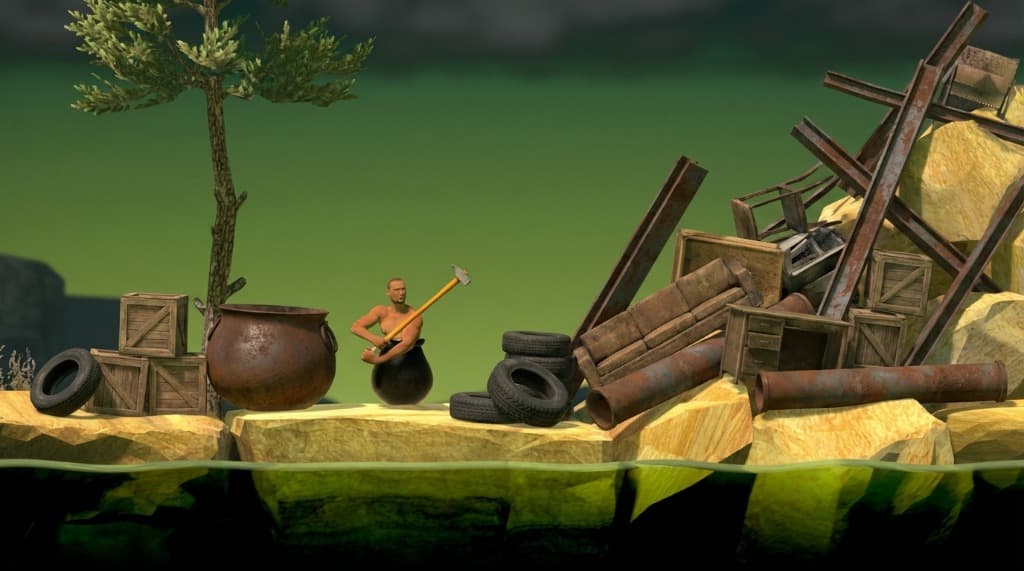
Getting Over It with Bennett Foddy came out in October 2017 and became this weird cultural thing. You play as a guy stuck in a pot, climbing a mountain using only a hammer. That's it. No checkpoints, no safety net, one wrong move and you fall all the way back to the start. The game is intentionally brutal and designed to frustrate you. Over 2.7 million people have played it despite how punishing it is. What makes it different is that Bennett Foddy, the creator, talks throughout the game about failure and perseverance and philosophy while you're getting destroyed. It's rage-quitting meets actual reflection on why you're suffering.
What is Getting Over It?
You control a guy named Diogenes in a big metal pot, and you've got a climbing hammer. That's all. You move your mouse to position the hammer, click and drag to hook onto rocks and trees, and pull yourself up the mountain. The physics are realistic and unforgiving, every movement has weight and momentum. Swing too hard and you spin out of control. Move too slow and you don't generate enough power to get anywhere.
The whole point is just reach the top. Sounds simple. It's not. There are no checkpoints. You fall once near the end and lose hours of progress. That's the design, intentionally brutal. Foddy made it this way specifically to frustrate people and see how they handle it.
Throughout the climb, Foddy narrates philosophical stuff. Failure, perseverance, difficulty in games, life in general. He's talking while you're tilted, trying to give context to the suffering. It's weird but it works.
Why Play Getting Over It?
- Pure Skill, Nothing ElseNo power-ups, no easier mode, no help. Success is pure skill and mental toughness. You master the hammer physics or you don't. When you finally finish, you've earned it.
- Learn Something from FailingThe game is specifically about failure. Every fall teaches you something. You fail a hundred times on a section, then suddenly you get it. Your hands remember the movement.
- Physics Take MasteryAt first the hammer just feels clumsy. After a bunch of attempts you start getting the hang of it. Eventually you figure out how to swing it right, how to position yourself, where to aim.
- Speedrunning CommunityThere's an active speedrunning scene with thousands of submitted runs. The world record is under 60 seconds, which is insane considering most players take hours or never finish.
How to Play Getting Over It
Move your mouse to position the hammer, click and drag to hook onto stuff. You use the hammer to pull yourself up or push yourself forward. The hammer can launch you through the air if you generate enough momentum. R restarts if you want to give up.
Your character has weight. Swinging wildly spins you out. Moving carefully means no power. You need to find the balance between being reckless and being too cautious.
The mountain has different sections. Early stuff is forgiving, you lose seconds if you mess up. Middle sections are trickier, falls cost more time. Late game is pixel-perfect, the infamous Orange Hell section destroys people.
Pro Tips for Not Losing Your Mind
Understand Momentum
Quick flicks of the hammer launch you, slow careful movements help when you need precision. Practice pulling down hard on the hammer, that creates a catapult effect that shoots you upward.
Stay Calm
Your mental state matters more than the difficulty. When you fall, breathe before restarting. Frustration makes your movements sloppy which makes you fall more.
Memorize the Mountain
The layout stays the same every time you play. After falling a few times, you start remembering the route through early sections and you can get through them faster.
Take Breaks
If you keep messing up the same spot, just stop and do something else. Your brain keeps working on the problem in the background. Come back later and suddenly you'll see the answer.
The Sections of the Mountain
The Beginning: Flat ground with initial rocks and trees. Teaches basic hammer control. Falls here don't cost much, perfect practice area.
The Rocks: Large boulders and cliffs demand precise positioning. You learn vertical surfaces and tough angles. Mistakes start costing real time.
The Anvils: Anvils floating in space, no solid ground. One of the scariest sections for new players. Transfer between platforms or die trying.
Orange Hell: The worst section. Poorly placed stuff, awkward angles, unforgiving surfaces. Ends countless runs. Getting through here is huge.
The Summit: Reach the top and something weird happens. A secret reward for people who actually make it.
Speedrunning and Records
The world record is under 60 seconds. To put that in perspective, playtesters took a median of 5 hours, and many never finished. That gap shows how much skill ceiling is in a game about moving a hammer.
Speedrunners have figured out insane momentum tech, perfect hook placements for launching angles, sequence breaks that skip sections, frame-perfect inputs to maximize speed. A 5-hour casual run versus a sub-minute speedrun is the same game but completely different.